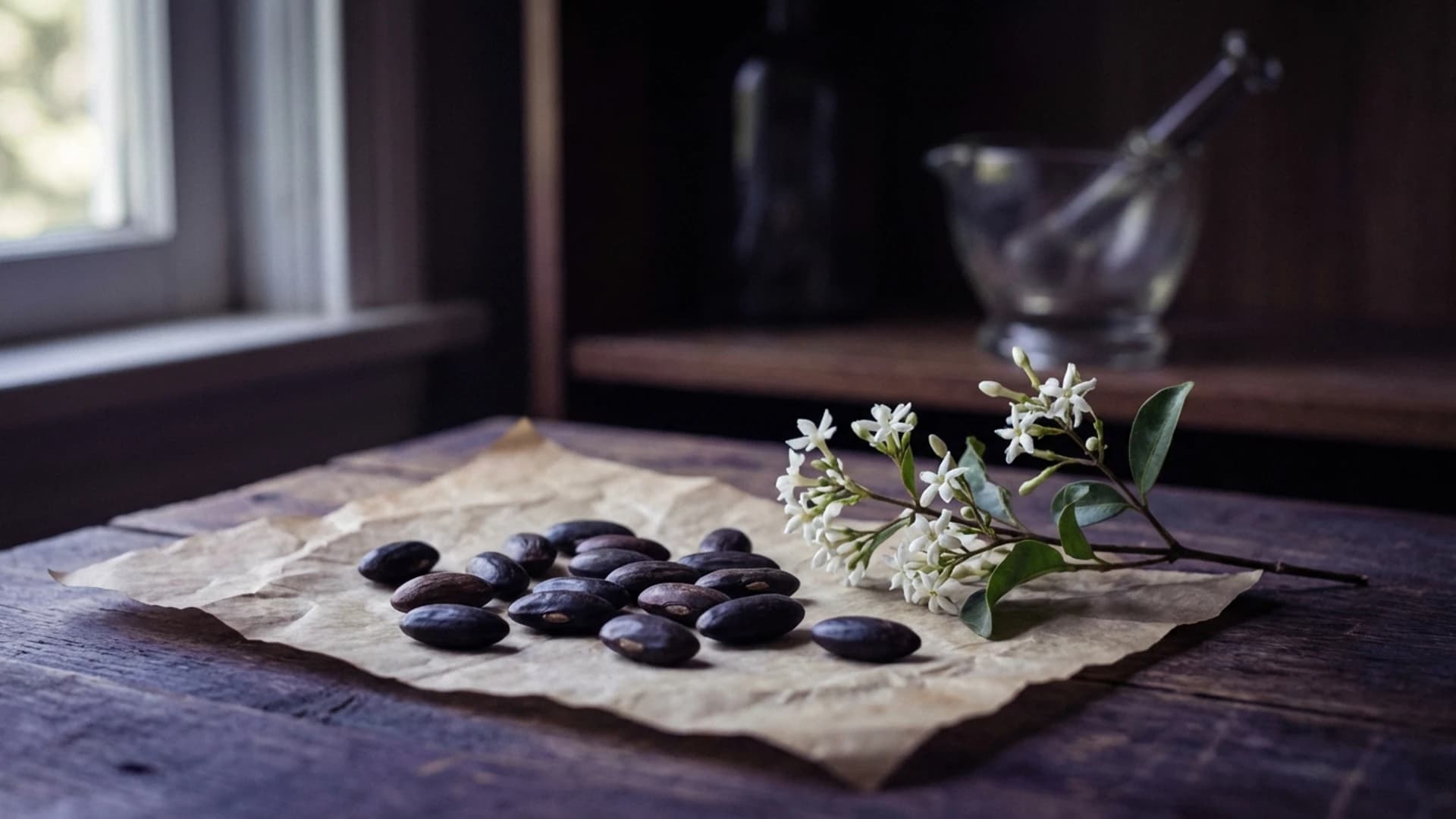


Among the great polycrest remedies of the homeopathic materia medica, Rhus toxicodendron holds a special place as the remedy of stiffness, restlessness, and the "rusty gate" pattern. Prepared from the poison ivy plant, Rhus tox produces a symptom picture that practitioners encounter with remarkable frequency: the patient who is stiff and painful on first motion, loosens up with continued movement, and stiffens again after prolonged rest. This modality pattern — worse on initial motion, better from continued motion — is one of the most recognisable and clinically reliable keynotes in the entire materia medica.
Rhus tox's sphere of action is broad, encompassing the musculoskeletal system, skin, connective tissue, and mucous membranes. From acute sprains and strains to chronic rheumatic conditions, from herpetic eruptions to restless febrile states, the remedy appears again and again in clinical practice. For students, learning Rhus tox thoroughly is not merely an academic exercise — it is preparation for some of the most common prescribing decisions you will face.
This profile draws on the classical sources to present Rhus tox comprehensively. The full proving data and commentary are available through Similia's free digital materia medica, where you can cross-reference Clarke, Boericke, Allen, and Kent's descriptions of this essential remedy.
The Rhus Tox Constitutional Type
The Rhus tox constitutional type is characterised by restlessness, both physical and mental. These individuals have a fundamental inability to remain still for long periods. They shift in their chairs, change positions in bed, and feel compelled to move even when fatigued. This is not the anxious restlessness of Arsenicum — it is a physical restlessness driven by the relief that movement provides.
Physically, Rhus tox constitutions tend towards muscular builds that stiffen easily. They may report a lifelong pattern of joint and muscle stiffness that is worse in the morning, worse in cold damp weather, and better once they "get going." They are often athletic or physically active individuals who push through initial stiffness to reach a state of comfortable movement, only to stiffen up again when they stop.
The Rhus tox temperament includes a characteristic apprehensiveness, particularly at night. There may be superstitious fears, a sense of unease in the dark, or anxiety that something will go wrong. This mental component is less prominent than in Arsenicum but is nonetheless a consistent feature of the constitutional picture.
Mental and Emotional Picture
Restlessness. The mental restlessness of Rhus tox is inseparable from the physical restlessness. The patient cannot stay in one position, one place, or one activity for long. At night, this restlessness becomes particularly troublesome — the patient tosses and turns, unable to find a comfortable position, driven to move by the stiffness and aching that develops whenever they remain still.
Apprehension and anxiety at night. As evening approaches and the patient becomes still, a characteristic anxiety emerges. There may be fears that something bad will happen, a sense of vulnerability, or superstitious thoughts that the patient recognises as irrational but cannot dismiss. This nocturnal anxiety is a subtle but reliable feature.
Weeping without knowing why. Rhus tox can produce episodes of tearfulness that the patient cannot explain. There is no clear emotional trigger — the tears come spontaneously, often accompanied by restlessness and a desire to be in motion. This symptom is more common in chronic Rhus tox states than in acute presentations.
Desire for change and motion. The Rhus tox mind mirrors the body's need for movement. There is an intolerance of monotony, a desire for variety, and a restless seeking that can manifest as frequent changes of activity, position, or even location.
Physical Affinities
Musculoskeletal system. This is Rhus tox's primary domain. The remedy has a profound action on muscles, tendons, ligaments, and joint capsules. It produces stiffness that is worst on initial movement after rest, gradually improves with continued motion, and returns after prolonged activity or when the patient stops moving again. This "rusty gate" pattern — creaking and painful at first, smoothing out with use — is the single most important feature to recognise.
Skin. Rhus tox produces vesicular eruptions — small, fluid-filled blisters that cluster together, itch intensely, and burn. The connection to poison ivy is direct: the plant produces this type of eruption on contact, and the potentised remedy treats similar eruption patterns. Herpes simplex, herpes zoster (shingles), eczema with vesicular character, and contact dermatitis all fall within the remedy's scope when the modalities match.
Connective tissue. Tendons, ligaments, fasciae, and periosteum are all strongly affected. Sprains, strains, overuse injuries, and repetitive strain conditions respond to Rhus tox when the characteristic modalities are present. The remedy has a particular affinity for conditions where connective tissue becomes stiff and contracted.
Mucous membranes. Rhus tox can affect the mucous membranes of the mouth and throat, producing a dry throat with thirst, a characteristic triangular red tip to the tongue, and sometimes a hoarse voice that improves with use (paralleling the musculoskeletal pattern of improvement from continued activity).
Key Modalities
These modalities are among the most consistent and clinically reliable in the materia medica.
Worse from:
- First motion after rest — the hallmark modality; stiffness and pain are worst when beginning to move
- Cold, damp weather — cold wet conditions aggravate profoundly
- Rest and immobility — prolonged sitting, lying, or remaining in one position
- Night — symptoms intensify during the night, particularly the restlessness
- Getting wet — especially getting wet while overheated
- Overexertion — excessive activity, after the initial improvement from movement, eventually aggravates
Better from:
- Continued motion — the stiffness loosens and pain decreases with ongoing gentle movement
- Warmth — warm applications, warm weather, warm baths
- Change of position — even small shifts provide temporary relief
- Rubbing and massage — direct warmth and friction to affected areas
- Stretching — extending stiff limbs and joints provides relief
- Dry weather — the opposite of the cold damp aggravation
The pattern of "worse on first motion, better from continued motion" is the single most important modality to identify. When a patient reports that they are stiff and painful getting out of bed but loosen up after moving around, the prescriber should immediately think of Rhus tox.
Keynote Symptoms
- Stiffness worse on first motion, better from continued movement — the "rusty gate" keynote
- Restlessness — cannot remain still, especially at night
- Aggravation from cold, damp weather — a strong physical general
- Vesicular skin eruptions — clusters of small blisters with intense itching and burning
- Triangular red tip of the tongue — a characteristic objective sign
- Desire for cold milk — a peculiar but well-verified craving
- Aching as if beaten or bruised — particularly in the limbs and back
- Improvement from warmth in all forms — warm applications, warm weather, warm baths
Clinical Applications
Sprains, strains, and overuse injuries. Rhus tox is one of the first remedies to consider after musculoskeletal injuries involving tendons and ligaments. The classic indication is a sprained joint that is stiff and painful initially but loosens with gentle movement. It is particularly useful in the sub-acute phase, after the initial inflammatory period has subsided and stiffness has set in.
Rheumatic and arthritic complaints. Chronic joint stiffness that is worse in the morning, worse in cold damp weather, and better once the patient "warms up" and gets moving is a classic Rhus tox presentation. Many patients with osteoarthritis describe exactly this pattern.
Herpes zoster (shingles). The vesicular eruption of shingles — clusters of blisters along a nerve distribution, with burning and itching — matches Rhus tox's skin picture closely. The remedy is frequently indicated in these cases, especially when the characteristic restlessness and modalities are present.
Herpes simplex. Cold sores and genital herpes with the vesicular character, burning, and itching respond to Rhus tox when the general picture matches.
Back pain and sciatica. Lower back stiffness that is worst on rising from a seated or lying position, improves with walking, and returns after prolonged standing or sitting is a textbook Rhus tox indication. Sciatica with the same modality pattern also falls within the remedy's sphere.
Restless febrile states. In acute illness, Rhus tox covers fevers with intense restlessness, aching throughout the body, and the characteristic worse-from-rest modality. The patient tosses and turns in bed, unable to find relief in any position for long.
Differential Diagnosis
Rhus tox vs. Bryonia. These two remedies represent opposite poles of a critical modality axis and are among the most important differentials in the materia medica. Bryonia is worse from any motion and better from absolute rest — the patient lies perfectly still and does not want to be disturbed. Rhus tox is worse from rest and better from continued motion — the patient cannot stay still. Bryonia's pains are sharp, stitching, and aggravated by the slightest movement. Rhus tox's pains are aching, stiff, and relieved by movement. Getting this differential right is fundamental to accurate prescribing in acute musculoskeletal and febrile conditions.
Rhus tox vs. Ruta graveolens. Both remedies affect tendons and connective tissue, but Ruta has a stronger affinity for the periosteum (the membrane covering bones) and for conditions where tendons attach to bone. Ruta's stiffness does not improve as markedly with motion as Rhus tox's does. When a sprain or strain involves the bone–tendon junction (as in wrist or ankle injuries), Ruta may be more closely indicated.
Rhus tox vs. Arnica. Arnica is the first remedy for acute trauma — the moment of injury, with bruising, soreness, and the "bed feels too hard" sensation. Rhus tox follows Arnica in the recovery phase, when the acute bruising has resolved but stiffness and restricted movement remain. In clinical practice, it is common to prescribe Arnica first and then follow with Rhus tox as the presentation evolves.
Repertorisation Tips
Key rubrics for identifying Rhus tox in repertorisation:
- Generalities; MOTION; beginning of; agg. — the hallmark modality
- Generalities; MOTION; continued; amel. — the complementary half of the keynote
- Generalities; WEATHER; cold, wet; agg. — a strong physical general
- Extremities; STIFFNESS; morning — the characteristic morning stiffness
- Mind; RESTLESSNESS; night — the nocturnal restlessness
- Skin; ERUPTIONS; vesicular — the vesicular skin picture
- Back; STIFFNESS; rising from a seat — a commonly encountered specific
- Generalities; WARMTH; amel. — the thermal modality
When using digital repertory software, the combination of the motion modalities (worse first motion, better continued motion) with the weather modality (worse cold damp) and the thermal general (better warmth) produces a highly reliable result for Rhus tox.
Deepening Your Study
Rhus tox is one of those remedies that you will prescribe frequently throughout your career. The "rusty gate" pattern is so common in clinical practice — particularly in musculoskeletal complaints — that recognising it becomes almost automatic with experience. But the remedy's depth extends beyond the musculoskeletal system, and the skin, the febrile states, and the mental picture all reward careful study.
The classical authors bring different strengths to the study of Rhus tox. Clarke's Dictionary provides exhaustive detail, Boericke offers clinical conciseness, and Kent's lectures illuminate the mental and emotional dimensions. You can explore all these perspectives through Similia's free materia medica. For broader context on how Rhus tox fits within the essential polycrest group, our study guides offer a structured overview.